
Advanced Emergency & Pre-Hospital Care Sciences Masters Program Notice: The MSc Emergency Medical Technology at International University of Barbados is an advanced postgraduate program designed for EMT and allied health professionals seeking specialist expertise in advanced life support, pre-hospital trauma care, disaster medicine, mass casualty management, critical care transport, emergency leadership, and emergency health systems management. Graduates are trained to lead emergency medical services (EMS) teams and drive evidence-based emergency care research.
Program Overview
The MSc Emergency Medical Technology at International University of Barbados is a 2-year advanced postgraduate program for emergency medical professionals seeking specialist-level expertise in advanced life support (ALS), critical care transport, pre-hospital trauma management, disaster preparedness, and emergency health systems leadership. With global increases in trauma, cardiac emergencies, natural disasters, and mass casualty incidents, skilled emergency medicine leaders are in critical demand worldwide.
Students develop advanced proficiency in advanced cardiovascular life support (ACLS), pre-hospital trauma life support (PHTLS), pediatric advanced life support (PALS), rapid sequence intubation, advanced airway management, emergency pharmacology, hemodynamic management in the field, point-of-care ultrasound (POCUS) in emergency settings, mass casualty incident (MCI) command, and EMS system administration and leadership.
Clinical rotations in emergency departments, intensive care units, trauma centers, air ambulance services, and disaster management agencies provide real-world exposure across acute, prehospital, and mass casualty care environments.
Why Study MSc EMT at IUB?
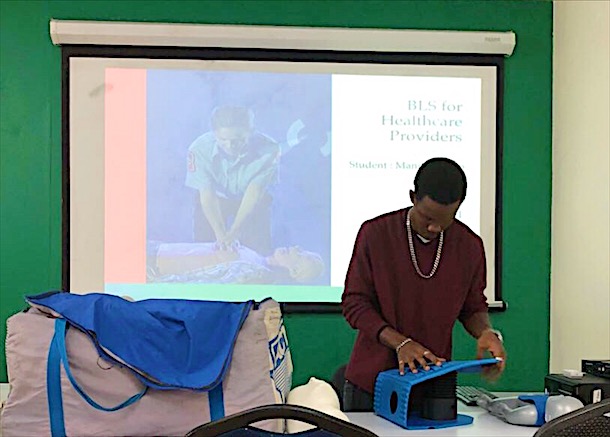
IUB's Emergency Medical Sciences Centre features high-fidelity simulation manikins for ACLS/PALS, ambulance simulation pods, mass casualty triage training areas, POCUS simulation stations, and disaster management command-post training environments. Faculty include senior emergency physicians, paramedics, disaster medicine specialists, and EMS directors.
International EMS & Emergency Care Standards
Aligned with NAEMSP, ILCOR resuscitation guidelines, WHO emergency care frameworks, and FEMA disaster management standards, our MSc curriculum prepares graduates for senior EMS leadership roles, international deployments, and advanced emergency medicine certifications.
Key Learning Outcomes
Admission & Eligibility Criteria
Candidates applying for MSc Emergency Medical Technology must hold a relevant allied health or emergency medicine science bachelor's degree:
Bachelor's Degree Qualification
Successful completion of BSc Emergency Medical Technology, BSc Paramedic Science, BSN, BPT, BAOTT, or any recognized allied health / emergency medicine bachelor's degree from an accredited institution.
Minimum Academic Grade
Minimum aggregate of 55% marks / CGPA 2.5 in the qualifying bachelor's degree. Candidates with relevant emergency / pre-hospital care work experience may also be considered.
Clinical Experience (Preferred)
Minimum 1 year of EMS / emergency department clinical experience is preferred. Fresh BSc EMT graduates with strong academic records and relevant certifications (EMT-B, ACLS) may also apply.
Required Application Documents
- Bachelor's Degree Certificate & Official Academic Transcripts.
- Detailed CV / Resume with emergency / EMS work experience (if any).
- Copy of current EMT / Paramedic certification (if applicable).
- Government ID / Valid Passport Copy.
- Two Professional Reference Letters from supervisors or academic faculty.
- Medical Fitness Certificate for emergency department clinical rotations.
- Statement of Purpose (SOP) — Research interests & EMS career goals.
MSc EMT Academic Curriculum & Syllabus
The MSc Emergency Medical Technology covers 4 semesters of advanced emergency medicine science, clinical rotations in EDs, trauma centers and ICUs, and a research dissertation:
Assessment & Evaluation Methodology
MSc EMT evaluation combines continuous theory assessments, high-fidelity simulation scenario exams (ACLS/PHTLS/MCI), clinical emergency department rotation evaluations, and research dissertation defense:
Career Opportunities & Professional Scope
MSc EMT graduates are highly sought after for senior EMS, trauma, critical care, and emergency leadership roles in hospitals, national ambulance services, disaster agencies, and international humanitarian organizations:
International Certification & Doctoral Pathways
MSc EMT graduates can pursue PhD in Emergency / Disaster Medicine, internationally recognized NREMT (National Registry of Emergency Medical Technicians) Paramedic certification, FP-C (Flight Paramedic Certified), CCP-C (Critical Care Paramedic), or fellowships in Emergency Medical Services Medicine (EMS-M) and Wilderness Medicine for elite global career advancement.