
Program Overview
The Master of Science (MSc) in Radiology at the International University of Barbados – School of Medicine is an extensive, specialized program formulated for licensed medical doctors and ambitious healthcare professionals who aspire to master the intricate aspects of medical imaging, diagnostic techniques, and interventional radiology.
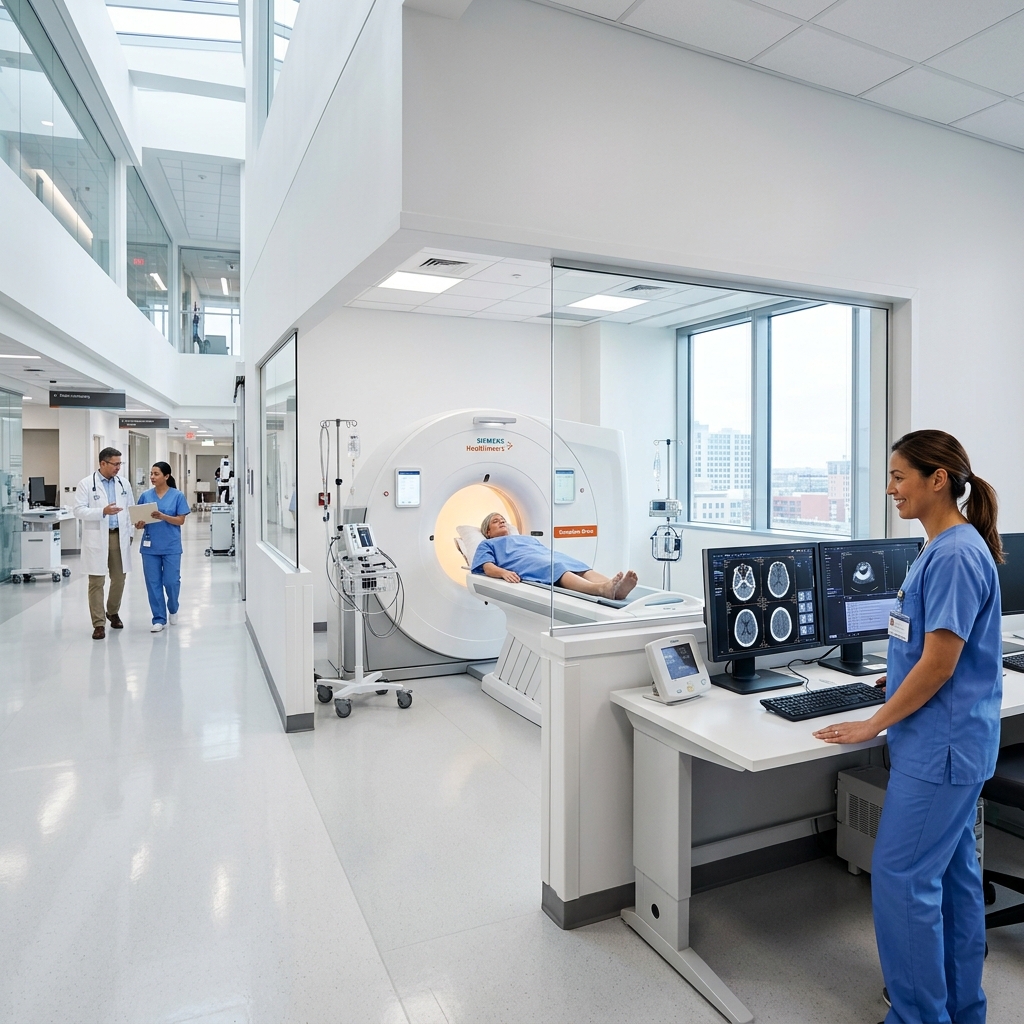
Radiology is a fundamental pillar of healthcare, profoundly impacting global health by enabling early diagnosis, guiding therapeutic interventions, and monitoring disease progression. This program deeply connects principles of radiologic physics and radiation biology with clinical pathology, empowering graduates to diagnose and manage a vast array of conditions, critically appraise emerging imaging modalities like advanced MRI and PET-CT, and pioneer in clinical research methodologies tailored to diagnostic medicine.
Delivered via a flexible, state-of-the-art online learning platform, the program integrates robust theoretical modules, evidence-based practical case studies, and advanced clinical research strategies to guarantee our alumni are well-equipped to practice at an elite international standard.
Why Choose IUB for Radiology?
At the International University of Barbados, we pride ourselves on delivering a curriculum that is not only academically rigorous but also deeply grounded in clinical realities. Our faculty comprises internationally renowned Radiologists and researchers who bring decades of practical experience into the virtual classroom. Students will benefit from our interactive case-based learning approach, which simulates real-world clinical challenges in interpreting complex scans, performing image-guided procedures, and identifying subtle pathologies, ensuring they are prepared to make critical diagnostic decisions in high-pressure medical environments.
Global Clinical Perspectives
Understanding Radiology requires a global perspective, as the incidence and manifestation of diseases, as well as access to imaging technology, can vary significantly across different socioeconomic and geographical regions. Our program incorporates diverse international case studies, enabling students to recognize and interpret medical images within various cultural contexts, from utilizing point-of-care ultrasound in developing areas to mastering complex neuro-imaging and interventional oncology globally.
Learning Outcomes
Eligibility Criteria
The MSc in Radiology requires a strong foundation in medical sciences. The program is specifically targeted towards physicians, clinicians, and health practitioners aiming to specialize or deepen their academic understanding of Radiology. Eligibility pathways include:
- MBBS, MD, DO, or equivalent internationally recognized medical degree; OR
- Relevant Bachelor’s or Master’s degree in Medical or Life Sciences (subject to departmental approval); AND
- Proficiency in English (IELTS/TOEFL may be required for non-native speakers).
English Language Proficiency
Because the language of instruction and examination for the MSc in Radiology is strictly English, applicants whose native language is not English, or who did not complete their foundational medical degree in an English-speaking institution, must demonstrate proficiency. Accepted tests include IELTS (minimum band 6.5), TOEFL iBT (minimum score 85), or equivalent qualifications. The admissions committee may also conduct a brief online interview to assess communicative competence.
Technical Requirements for Online Learning
As a fully online program, students are required to maintain reliable high-speed internet access. Our digital learning environment, which hosts live lectures, virtual labs, and interactive forums, requires a modern computer (Windows or Mac), a functioning webcam, and a headset with a microphone. Familiarity with standard word processing software and presentation tools is necessary for completing assignments and thesis work.
Academic Curriculum (24 Months)
Semester 1 (Core Principles of Diagnostic Imaging)
Comprehensive introduction to X-ray production, radiation safety, dosimetry, and biological effects of ionizing radiation.
Focuses on cross-sectional anatomy and physiological principles essential for interpreting complex imaging studies.
In-depth training on radiographic positioning, contrast media studies, and interpretation of plain films.
Semester 2 (Advanced Imaging Modalities)
Covers the principles of CT technology, protocol optimization, and multi-planar image interpretation.
Addresses MRI physics, pulse sequences, artifact reduction, and neuro/musculoskeletal MRI diagnostics.
Focuses on acoustic physics, Doppler imaging, and sonographic evaluation of abdominal and pelvic organs.
Semester 3 (Specialized Radiology and Interventions)
Advanced neuro-imaging of the brain and spine, focusing on stroke, tumors, and neurodegenerative disorders.
Comprehensive imaging of cardiopulmonary systems, gastrointestinal tract, and genitourinary pathologies.
Introduction to image-guided biopsies, drainage procedures, vascular access, and basic endovascular therapies.
Semester 4 (Advanced Practice & Thesis)
Specialized imaging techniques and interpretations tailored for children and complex bone/joint pathologies.
Interactive sessions simulating real-world complex diagnostic challenges requiring multifaceted imaging strategies.
Independent research under faculty supervision culminating in a substantial written thesis that contributes to radiology knowledge.
Assessment Structure
Evaluation in the MSc Radiology program is designed to comprehensively test theoretical knowledge, analytical skills, and research capabilities through a continuous assessment model:
Thesis Defense Expectations
The final semester culminates in a virtual thesis defense. Candidates must present their research findings to a panel of faculty members and external examiners. The presentation is evaluated based on the originality of the research, the rigor of the methodology, and the clinical applicability of the conclusions. Students will face a Q&A session where they must defend their literature review, statistical analysis, and ethical considerations.
Grading System
The International University of Barbados employs a stringent, criterion-referenced grading system. A minimum passing grade of 60% (or equivalent GPA) is required in all modules to progress. Clinical case studies are graded using standardized rubrics that prioritize patient safety, evidence-based reasoning, and holistic care models. Distinction is awarded to students achieving an aggregate score above 85%, reflecting outstanding mastery of Radiology.
Certification & Admissions
Intakes
- January (Spring Intake)
- May (Summer Intake)
- September (Fall Intake)
Certification
(International University of Barbados – School of Medicine)
Career Pathways & Opportunities
Completing the MSc in Radiology opens doors to numerous elevated career pathways. Our alumni are well-positioned to take on leadership roles within both clinical and academic environments.
- Specialist Radiologist: Lead clinical practice in hospital radiology departments, diagnostic imaging centers, or private clinics, providing expert interpretations and diagnostic insight.
- Academic & Research Roles: Transitioning into university lecturing, leading clinical trials in novel imaging techniques, or working in medical physics research.
- Healthcare Leadership: Taking up positions as Medical Directors for imaging centers, Chief of Radiology, or Chief Medical Officers.
Disclaimer: program subject to institutional approval and applicable accreditation requirements. Program structure and curriculum may be updated periodically to align with global medical education standards.